




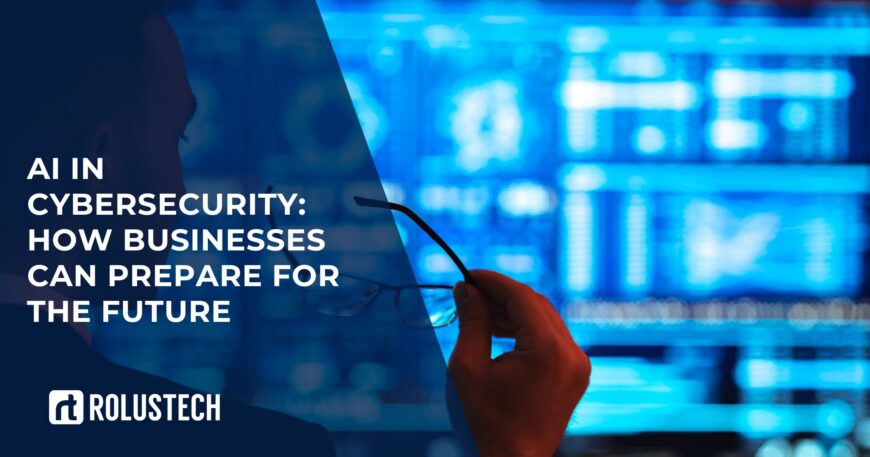
Cybersecurity is no longer just about firewalls, passwords, and antivirus software. The digital world has become faster, more connected, and more complex. Businesses now use cloud systems, remote teams, connected devices, customer portals, third-party apps, and lots of data daily.
That also means cyber risks are growing fast.
This is where AI in cybersecurity is becoming a real game-changer. It helps businesses detect suspicious activity, respond faster, and protect critical systems before attackers cause damage. Instead of waiting for a threat to become obvious, AI can spot unusual behavior early. It helps security teams act quickly.
For modern businesses, AI is not just an advanced security upgrade. It is becoming a core part of building smarter, stronger, and more proactive cybersecurity systems.
What Is AI in Cybersecurity and Why It Matters Today
AI in cybersecurity means using artificial intelligence, machine learning, and automation to improve how organizations detect, prevent, and respond to cyber risks. Traditional security systems often depend on predefined rules. They look for known attack patterns. But today’s attackers are smarter. They change tactics, use automation, and target weak points faster than manual systems can keep up. AI changes this approach.
An AI model can learn from previous activity, analyze behavior, and flag anything that looks unusual. It can help security professionals monitor systems, detect suspicious access, and reduce the time it takes to respond.
This matters because businesses now handle more sensitive information than ever before. Customer records, payment details, employee data, business documents, and private communications all need protection. With AI, cybersecurity becomes less reactive and more predictive.
The Changing Threat Landscape and the Need for Smarter Defense
The modern threat landscape is constantly changing. Cybercriminals are using smarter techniques, from phishing and ransomware to identity theft and supply chain attacks. Many attacks no longer look obvious at first. A login from a new location, a small data transfer, or a strange user action may seem harmless. But together, these signals can point to a larger attack.
This is why businesses need smarter defense systems.
AI can monitor huge amounts of activity across networks, devices, and applications. It can connect small warning signs that human teams may miss. This helps organizations detect cyber threats earlier and respond before they cause major disruption.
For growing businesses, this is especially important. As systems expand, manual monitoring becomes harder. AI gives security teams the scale and speed they need to protect modern digital environments.

How Artificial Intelligence AI Helps Detect and Respond to Cyber Threats
One of the biggest strengths of artificial intelligence AI is its ability to detect and respond quickly. Cyberattacks often move fast. A delayed response can lead to data loss, downtime, financial damage, or reputational harm. AI helps reduce that delay by spotting suspicious behavior in near real time.
For example, if an employee account downloads many files at midnight, an AI system can flag it right away. It can alert the team, restrict access, or trigger an automated response. This does not replace human judgment. Instead, it gives security professionals better visibility and faster alerts.
AI helps answer important questions like:
What happened?
Where did it happen?
Is it part of a larger attack?
What should the team do next?
That speed can make a major difference when dealing with serious cyber threats.
Using AI to Analyze Vast Amounts of Data and Identify Patterns
Cybersecurity creates a lot of data. Every login, file transfer, system update, network request, and user action leaves a trace. The challenge is that no human team can review all of this manually. AI can analyze vast amounts of data at a speed humans cannot match. It can review logs, user behavior, network traffic, and system activity to find hidden risks.
More importantly, AI can use this data to identify patterns that may not be obvious right away. These patterns can reveal suspicious behavior, unusual access, or early signs of an attack. For example, one failed login may not matter. But hundreds of failed attempts across multiple accounts may point to a brute-force attack. AI can connect those dots faster than a manual process.
This makes AI especially useful for businesses with large systems, multiple platforms, or distributed teams.
How Security Tools Leverage AI to Identify Vulnerabilities
Modern security tools are now built to leverage AI for stronger protection. AI can help businesses identify vulnerabilities in software, networks, cloud environments, and connected systems. It can scan configurations, detect weak access controls, and flag outdated components that may expose the business to risk.
This is valuable because vulnerabilities often exist quietly. They may not cause immediate problems, but attackers can exploit them later. AI-powered tools can help security teams prioritize risks based on severity. Instead of treating every alert the same, AI can show which issues need urgent attention.
For example, a misconfigured cloud storage bucket with customer data is more serious than a low-risk setting. This is true on an internal test system. AI helps teams focus where it matters most. This makes cybersecurity more efficient, especially when teams are managing many systems at once.
The Role of Deep Learning in Modern Threat Detection
Deep learning plays a major role in advanced cybersecurity systems. Unlike basic rule-based tools, deep learning models can process complex data and learn from patterns over time. This makes them useful for detecting advanced threats that do not match known attack signatures.
Deep learning supports tasks like malware detection, phishing analysis, network monitoring, and fraud detection. It can study how normal behavior looks, then highlight activity that does not fit. For example, if a file acts like malware but is new, a deep learning system may still flag it.
This is important because new attacks appear every day. Businesses cannot depend only on old threat databases. They need systems that can learn, adapt, and improve. That is exactly where deep learning strengthens AI in cybersecurity.
AI-Powered Threat Hunting for Emerging Threats
Threat hunting is the process of actively searching for hidden threats inside a system. Instead of waiting for alerts, security teams look for signs of compromise before attackers cause damage. AI makes threat hunting faster and smarter.
It can scan massive datasets, highlight suspicious patterns, and suggest areas where cybersecurity professionals should investigate. This helps teams find emerging threats that may not trigger standard alerts. For example, AI can detect unusual login behavior, strange data movement, or rare system processes. These small signals may point to an attacker already inside the network.
AI-powered threat hunting improves visibility. It also reduces the manual workload for security teams. Instead of spending hours searching through logs, teams can focus on the most important risks.
Protecting Sensitive Information and Sensitive Data with AI Models
Every business handles some form of sensitive information. This may include customer records, payment details, contracts, internal documents, or employee information. Protecting this sensitive data is one of the most important goals of cybersecurity.
AI can help by monitoring how people access, share, store, and move data. It can detect unusual activity, such as large downloads, unauthorized access, or attempts to transfer data outside the company. An AI model can also help classify data based on sensitivity. This allows businesses to apply stronger controls to critical information.
For example, financial records may need stricter access rules than general marketing files. AI can support this process by identifying where sensitive data exists and tracking how people use it. This gives businesses more control over their data security.
How AI Supports Security Teams and Cybersecurity Professionals
AI is not here to replace security teams. It is here to support them. Cybersecurity professionals deal with constant alerts, complex systems, and growing pressure. Many teams face alert fatigue because they get too many warnings. Many of these alerts are low priority or false positives.
AI helps reduce that noise. It can filter alerts, prioritize threats, and give security professionals clearer context. This allows teams to spend less time sorting through data and more time solving real problems.
For a cybersecurity professional, AI can act like a smart assistant. It can summarize incidents, recommend actions, and help investigate suspicious behavior faster. This improves productivity and helps teams respond with more confidence. When used well, AI strengthens human expertise instead of replacing it.
AI vs. Human Analysts
The debate around AI and human analysts is often misunderstood. AI is fast, scalable, and excellent at pattern recognition. It can process huge amounts of information and detect unusual activity quickly. But it does not understand business context the same way humans do.
Human analysts bring judgment, experience, and strategic thinking. They understand risk, business impact, and how to make decisions in complex situations. So the best approach is not AI versus humans. It is AI plus humans. AI handles speed and scale. Human analysts handle interpretation and decision-making.
Together, they create a stronger cybersecurity model. AI helps find the signals, while humans decide what those signals mean and how the business should respond.
Real-Time Security Monitoring with AI in Cybersecurity
Speed is critical in cybersecurity. A threat that goes unnoticed for hours can cause serious damage. This is why real-time monitoring has become so important. With AI in cybersecurity, businesses can monitor systems continuously. AI can detect unusual behavior as it happens and alert teams before an issue spreads.
Real-time AI monitoring can support areas like login activity, network traffic, file movement, application behavior, and endpoint security. For example, if a user account suddenly tries to access restricted data, AI can flag the action immediately. In some cases, it can also trigger automated controls, such as locking the account or requiring additional verification.
This helps businesses reduce risk and respond faster.
Common Challenges of Using AI in Cybersecurity
AI is powerful, but it is not perfect. One common challenge is data quality. AI systems need reliable data to work well. If the data is incomplete, outdated, or poorly structured, the results may not be accurate.
Another challenge is false positives. AI may sometimes flag normal behavior as suspicious. If the system does not tune properly, this can create extra work for security teams. There is also the risk of attackers using AI themselves. Cybercriminals can use AI to create better phishing emails, automate attacks, or test security weaknesses faster.
Businesses also need skilled professionals who understand how to manage AI-powered security systems. We should monitor, update, and review AI regularly. The key is to use AI responsibly, with strong governance and human oversight.
The Future of AI in Cybersecurity
The future of cybersecurity will be heavily shaped by AI. As attacks become more advanced, businesses will need systems that can learn quickly, adapt to new risks, and respond in real time. AI will play a major role in making that possible.
We can expect AI to work more closely with security operations. It will also support cloud protection. It will help with identity management. It will improve compliance. It will automate response workflows.
AI will also help businesses move from reactive cybersecurity to predictive cybersecurity. Instead of only responding after an attack, organizations can spot risks earlier and strengthen defenses before problems happen.
For companies that manage sensitive data, customer platforms, enterprise systems, and digital operations, AI will be important. It will help them stay cyber resilient over the long term. The future belongs to businesses that combine smart technology with strong human expertise.
Conclusion
AI in cybersecurity is no longer a future concept. It is already changing how businesses detect threats, protect data, and support security teams.
From threat detection and vulnerability scanning, AI helps businesses work faster. It provides better insights. It also supports real-time monitoring and AI-based threat hunting. It helps them manage today’s complex cyber risks.
But AI works best when paired with experienced professionals. Security still needs human judgment, strategic thinking, and business context. At Rolustech, we help businesses build smarter, secure, and scalable digital solutions. With the right mix of AI, automation, and engineering skills, organizations can improve cybersecurity.
They can prepare for the future. They can move forward with confidence.
FAQs
What is AI in cybersecurity?
AI in cybersecurity uses artificial intelligence, machine learning, and automation to detect threats. It helps analyze risks and improve security response. It helps businesses monitor systems, identify suspicious behavior, and protect sensitive data more effectively.
How does AI help detect cyber threats?
AI can analyze large volumes of security data and identify patterns that may point to cyber threats. It can detect unusual logins, suspicious file activity, malware behavior, and other warning signs faster than manual methods.
Can AI replace cybersecurity professionals?
No. AI supports cybersecurity professionals but does not replace them. AI is useful for speed, automation, and pattern recognition, while human analysts provide judgment, context, and strategic decision-making.
Why is real-time monitoring important in cybersecurity?
Real-time monitoring helps businesses detect and respond to threats as they happen. This reduces the risk of data loss, downtime, and long-term damage caused by delayed responses.
How do security tools leverage AI?
Modern security tools leverage AI to detect vulnerabilities, monitor behavior, prioritize alerts, and automate responses. This helps security teams focus on the most serious risks first.
What role does deep learning play in cybersecurity?
Deep learning helps cybersecurity systems detect complex threats by learning from data patterns. Identifying malware, phishing attempts, suspicious behavior, and new attack methods is useful.
Is AI cybersecurity suitable for growing businesses?
Yes. Growing businesses often manage more users, systems, and data over time. AI-powered cybersecurity can help them scale protection, reduce manual work, and improve visibility across digital operations.