




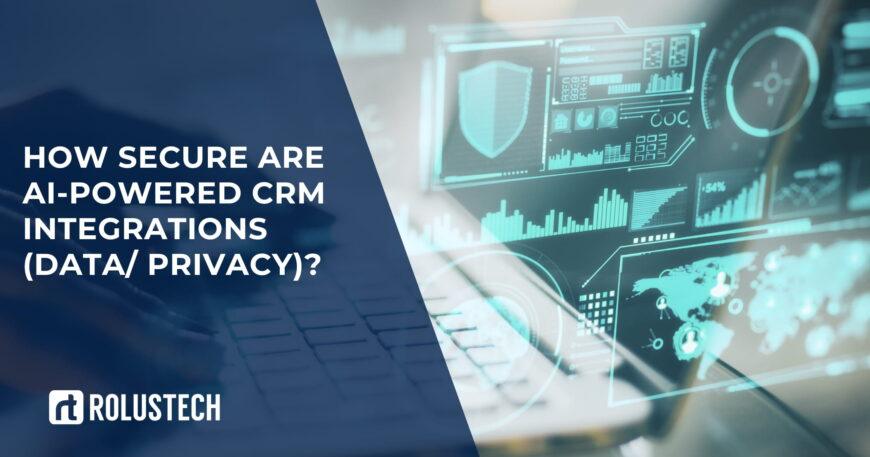
In today’s digital era, AI-powered CRM systems are redefining how businesses engage with their customers. They can analyze patterns, automate responses, and forecast sales with remarkable accuracy. However, with great data power comes a greater need for AI CRM security and data privacy.
Every customer interaction stored in a CRM contains sensitive data from personal identifiers to purchase behavior. Once AI CRM integrations process this data, it moves across multiple systems, often in the cloud. Without proper data protection in AI systems, this flow becomes a potential vulnerability.
Organizations must therefore prioritize secure CRM integrations. A single breach or misuse of data can destroy trust, attract regulatory fines, and harm a company’s brand. In this evolving landscape, AI-powered CRM security is not a luxury it’s a necessity that determines how safe, compliant, and future-ready your CRM truly is.
Understanding AI-Powered CRM Integrations
An AI-powered CRM integration connects artificial intelligence models with CRM platforms like Salesforce, HubSpot, or SugarCRM. The goal is to make customer management more intelligent and more predictive. AI analyzes historical data, customer sentiment, and purchase intent to help sales and marketing teams act faster and more effectively.
But behind these seamless experiences lies a complex data exchange process. AI tools often pull information from multiple databases, APIs, and third-party systems. This means CRM data privacy depends on how securely that information is transferred, stored, and used by the AI models.
In simple terms, these integrations bridge intelligence and insight, but if the bridge isn’t secure, the entire system becomes vulnerable. Protecting that bridge through encryption, access control, and AI data governance is what ensures business continuity and customer trust.

The Data Privacy Risks of AI in CRM
When integrating AI into CRM platforms, data privacy becomes the most sensitive area of concern. AI systems thrive on data the more they have, the wiser they get. But this creates risk if the data isn’t anonymized, encrypted, or consented to adequately.
One significant risk is unauthorized data access. AI algorithms often access deep layers of CRM data, including personal identifiers. Without strict user controls, employees or bots might see information they shouldn’t. Another issue is data sharing across systems, where APIs connect CRMs to external AI platforms that may have weaker security standards.
Moreover, AI data ethics plays a key role. If customer data is used for predictions without explicit consent, it can violate GDPR or HIPAA regulations. These privacy risks highlight why modern CRMs must incorporate AI data governance frameworks that define how, when, and why data is processed.
Common Security Challenges in AI-Driven CRM Systems
AI brings intelligence, but also introduces new layers of complexity. One major challenge is AI model security, protecting the algorithms themselves from tampering or misuse. If a malicious actor manipulates model inputs, it could lead to biased or false predictions.
Another concern is cloud CRM security. Many AI integrations rely on cloud infrastructure for scalability. While this improves efficiency, it also increases exposure to threats if encryption or CRM access control isn’t properly enforced.
Additionally, data lifecycle management is often overlooked. Businesses collect and store massive datasets without defining how long the information should be retained. This increases exposure to leaks or compliance violations. Lastly, ensuring secure CRM integrations across multiple vendors can be tricky one weak link in the ecosystem can compromise the entire network.
How Modern CRMs Address AI Data Security
Leading CRM platforms are adapting fast to address these risks. Modern systems now include end-to-end encryption, secure API gateways, and built-in compliance tools for GDPR and HIPAA.
For instance, Salesforce uses encrypted CRM data and role-based access control to prevent unauthorized entry. HubSpot integrates AI data ethics guidelines into its workflows to ensure that automated insights comply with privacy regulations. SugarCRM applies an AI model to detect unusual behavior that may signal data misuse.
These advanced measures ensure that AI CRM integration doesn’t just enhance performance but does so responsibly. Through layered security frameworks, multi-factor authentication, and AI data governance policies, modern CRMs are building a safer foundation for intelligent automation.

Key Best Practices for Securing AI-Powered CRM Integrations
To achieve AI-powered CRM security, organizations must combine technology, policy, and awareness. Start with data encryption at rest and in transit. Ensure every integration point from APIs to cloud connectors uses secure authentication methods.
Implement CRM access control so only authorized users can access sensitive records. Regular audits should verify that permissions align with business roles. Next, focus on AI data governance define who can train, test, and deploy AI models, and monitor how data flows within them.
Adopt user consent management systems that give customers transparency about how their information is being used. Businesses should also invest in risk mitigation frameworks and run penetration tests and vulnerability scans frequently. Finally, integrate AI model security checks that ensure algorithms cannot be manipulated or exploited.
Compliance and Regulations to Consider
Compliance is at the heart of CRM data privacy. Regulations like GDPR in Europe and HIPAA in the United States impose strict guidelines on how businesses collect, process, and store personal data.
Under GDPR, organizations must obtain explicit consent before processing data and allow users to opt out at any time. HIPAA focuses on healthcare data, ensuring that medical information shared through CRMs remains encrypted and confidential.
Beyond these, new AI-specific laws are emerging. The EU AI Act, for example, emphasizes AI transparency, bias prevention, and accountability in automated systems. To stay compliant, businesses should integrate privacy-by-design principles, conduct data protection impact assessments (DPIAs), and document their AI model training processes.
Privacy-First Design for AI Models
Security starts at the design stage. A privacy-first approach ensures AI models are built with ethical and secure data handling at their core. This includes using anonymized datasets, minimizing personal identifiers, and maintaining AI data ethics across every stage of the model lifecycle.
Developers should embed data masking, encryption, and access restrictions directly into model architecture. Transparency is key users should always know when AI is making a decision or recommendation about them.
Furthermore, implementing AI model explainability helps organizations trace how predictions are made. This not only strengthens trust but also supports CRM compliance with privacy regulations. The goal is to design AI systems that protect customer data by default, not as an afterthought.
Balancing Innovation and Security in CRM AI
Businesses often face a dilemma innovate fast or secure deeply. But in the world of AI-powered CRM, both must go hand in hand. Rapid AI adoption without risk mitigation can lead to costly breaches, while overregulation can stifle creativity.
The key lies in balance. Use automation responsibly by deploying cloud CRM security features and privacy-aware algorithms. Encourage cross-department collaboration between IT, compliance, and marketing teams to ensure that every innovation meets data protection standards.
In the end, AI CRM security is not about slowing progress but making innovation sustainable. Companies that treat data protection as a strategic advantage will build stronger relationships and long-term customer loyalty.
How to Choose a Secure AI-CRM Integration Partner
Selecting the right AI-CRM integration partner can make or break your security posture. Look for vendors with proven experience in data protection, CRM compliance, and AI model security. They should demonstrate strong encryption practices, frequent audits, and certifications like ISO 27001 or SOC 2.
Ask potential partners how they handle AI data governance and whether they follow privacy-first development principles. Evaluate their response times to vulnerabilities and their approach to incident management.
A reliable partner will not only integrate your CRM with AI but also ensure continuous monitoring, transparent data policies, and scalable risk mitigation strategies. In short, they don’t just sell technology, they build trust.
Conclusion: Building Trust Through Responsible AI in CRM
As artificial intelligence continues to reshape customer engagement, the importance of AI-powered CRM security cannot be overstated. Businesses that prioritize data privacy, AI ethics, and secure integrations stand out as responsible leaders in the digital economy.
Protecting customer data isn’t just a compliance requirement; it’s a commitment to transparency and reliability. By combining AI data governance, robust encryption, and compliance awareness, organizations can achieve both innovation and security in harmony.
In the end, the most valuable feature of any CRM system isn’t automation or analytics, it’s trust. Companies that build secure, privacy-conscious AI solutions will lead the future of customer relationships with confidence.
FAQs
What is AI-powered CRM security?
It refers to safeguarding data and systems in CRMs enhanced by artificial intelligence. It involves encryption, AI model protection, and strict CRM access control to ensure sensitive information remains private.
Why is data privacy important in AI CRM integrations?
Because AI systems handle massive volumes of personal data, privacy breaches can expose customers to identity theft and companies to regulatory penalties.
How can businesses ensure CRM compliance with GDPR and HIPAA?
By implementing user consent management, encrypting customer data, and conducting regular privacy audits to meet both GDPR and HIPAA standards.
What are the most significant risks in AI-driven CRM systems?
Common risks include unauthorized access, AI model manipulation, data leaks through APIs, and poor cloud CRM security configurations.
How can organizations balance AI innovation and security?
By embedding privacy-first design, maintaining transparent AI data governance, and partnering with trusted, compliant AI integration providers.