







Key Takeaways
- Dynamics 365 consulting services align CRM technology with your business goals, processes, data, and growth plans.
- The right Dynamics 365 consultant can reduce implementation risks through better planning, customization, migration, training, and support.
- A reliable Dynamics 365 consulting partner helps you choose the right solutions, avoid costly mistakes, and build a scalable CRM strategy.
What Are Dynamics 365 Consulting Services?
Dynamics 365 consulting services help businesses plan, implement, and optimize Microsoft Dynamics 365 based on their specific needs. Consultants guide solution design, migration, integration, training, and ongoing improvements.
What Does a Dynamics 365 Consultant Do?
A Dynamics 365 consultant analyzes business requirements and turns them into practical CRM solutions. They also support configuration, integrations, data migration, training, and adoption.
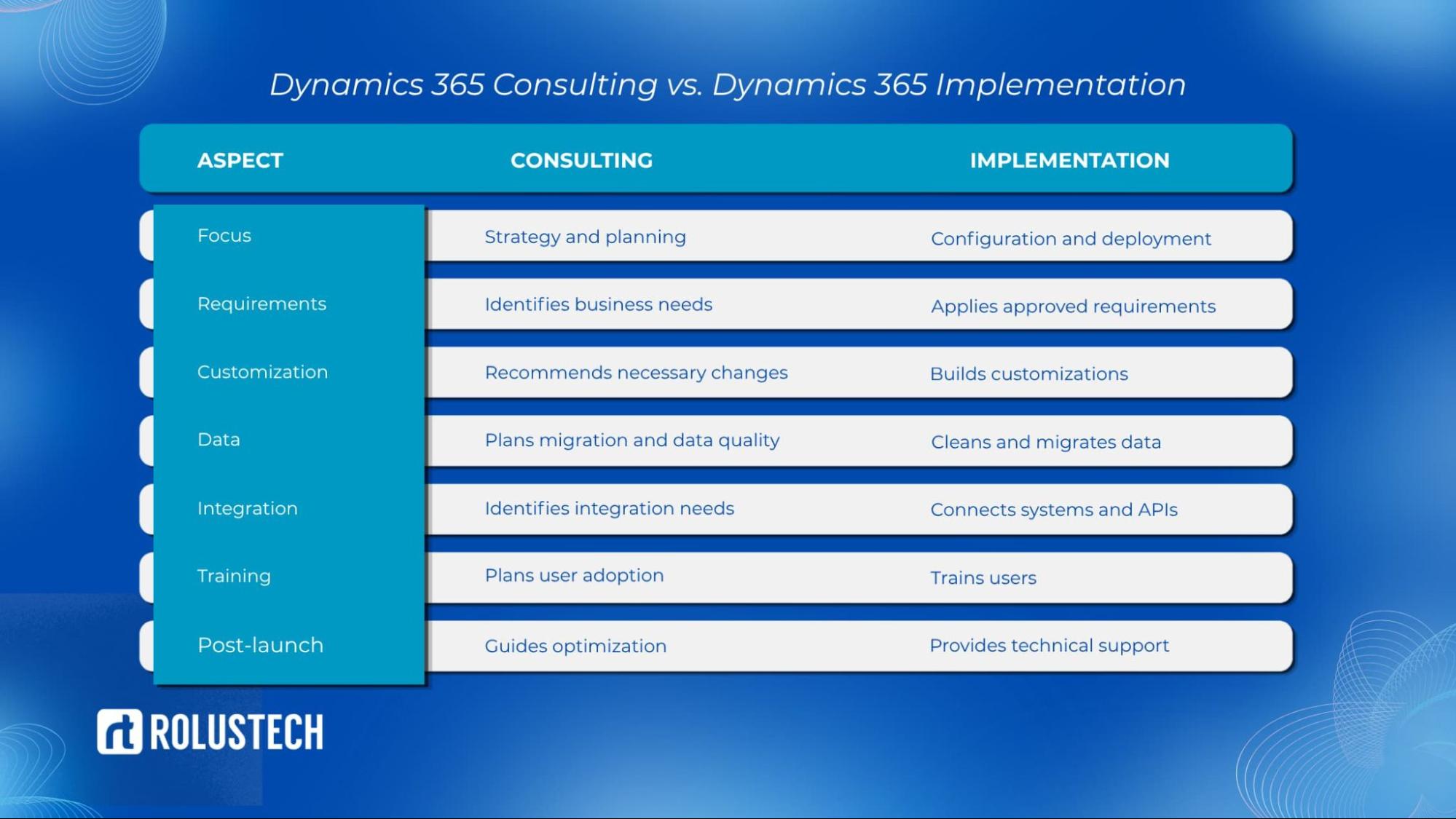
Dynamics 365 Consulting vs. Dynamics 365 Implementation
Consulting focuses on planning and strategy, while implementation focuses on configuration and deployment. Both work together to deliver a solution aligned with business needs.
Why Your Business Needs Dynamics 365 Consulting Services
Dynamics 365 consulting services help fix disconnected data, inefficient processes, and poor CRM visibility. Consultants align the platform with your business needs.
Aligning CRM With Business Goals
A Dynamics 365 consulting firm connects CRM features with your sales, service, marketing, and operational goals. This helps you choose the right applications.
Creating a Unified CRM and ERP Strategy
ERP and CRM integration connects customer data with finance, inventory, and operations. This improves coordination and supports smoother business processes.
Supporting Digital Transformation
Microsoft Dynamics 365 supports digital transformation through connected applications, automation, and real-time data. Consultants help businesses adopt these capabilities effectively.
What Services Does a Dynamics 365 Consulting Team Provide?
A Dynamics 365 consulting team supports the full implementation lifecycle. Services can include assessment, solution design, migration, integration, training, optimization, and ongoing support.
Business and CRM Needs Assessment
Consultants interview stakeholders, map business processes, and identify pain points. This helps define clear goals before recommending Dynamics 365 solutions.
Dynamics 365 Solution Design and Roadmapping
Consultants select suitable Dynamics 365 modules based on business priorities. They then create a phased roadmap covering implementation, integration, and future improvements.
Microsoft Dynamics 365 Implementation and Configuration
The team configures Microsoft Dynamics 365 CRM, workflows, security roles, and custom features. They also manage data migration, testing, and deployment.
CRM and ERP Integration
Dynamics 365 can connect CRM processes with ERP, finance, productivity tools, and third-party systems. This creates a more connected technology ecosystem.
User Training and Adoption
Role-based training helps employees understand the new system and workflows. A Dynamics 365 consulting team can also provide change management to improve adoption.
Ongoing Optimization and Support
Support continues after go-live through system monitoring, troubleshooting, upgrades, and performance improvements. Continuous optimization keeps the solution aligned with changing business needs.
How Dynamics 365 Consulting Helps Build a Smarter CRM Strategy
Dynamics 365 consulting goes beyond implementation by connecting CRM data, processes, and business goals. Consultants help create a strategy that can adapt as the business grows.
Centralizing Customer Data
Consultants bring customer information into a connected Dynamics 365 environment. Sales and service teams can then access a more complete customer view.
Automating Repetitive Business Processes
Dynamics 365 can automate tasks like lead assignment, follow-ups, approvals, case routing, and customer communications. This saves time and keeps workflows consistent.
Turning CRM Data Into Actionable Insights
Dashboards and analytics turn CRM data into useful insights. With real-time data, managers can track performance and make faster, informed decisions.
Building a Scalable CRM Architecture
Consultants design the CRM to support future growth, including new users, business units, applications, and integrations. This reduces the need for major changes later.
Dynamics 365 Solutions for Different Business Needs
Microsoft Dynamics 365 offers different applications for sales, customer service, finance, operations, and supply chain needs. Businesses can select the solutions that match their processes and growth plans.
Dynamics 365 Sales for Sales Teams
Dynamics 365 Sales helps teams manage leads, opportunities, sales pipelines, and customer interactions. Teams can also use forecasting and AI-driven insights to improve follow-ups and revenue planning.
Dynamics 365 Customer Service for Support Teams
Dynamics 365 Customer Service organizes support tickets, case routing, customer history, and knowledge resources. Automation helps agents respond faster while improving the overall customer experience.
Dynamics 365 Business Central for Growing Businesses
Dynamics 365 Business Central supports finance, inventory, purchasing, and daily operations in one system. Growing businesses can manage areas like financial reporting, stock levels, and vendor management as they scale.
Connecting Dynamics 365 Applications Across the Business
Connecting Dynamics 365 applications creates a shared flow of business information. For example, sales data can connect with Business Central, inventory, finance, and Power BI for better visibility and decision-making.

How Dynamics 365 Consulting Supports Different Industries
Dynamics 365 consulting services can be tailored to different industries and their workflows. Consultants connect the right applications, data, and processes to solve industry-specific challenges.
Dynamics 365 for Manufacturing
Manufacturers can connect CRM, inventory, production, and supply chain processes. This gives teams better visibility from customer orders to production and delivery.
Dynamics 365 for Professional Services
Professional service firms can manage leads, projects, customer relationships, and billing in connected workflows. This also helps teams track project costs and profitability.
Dynamics 365 for Retail and Distribution
Retailers and distributors can connect customer data with inventory, purchasing, sales, and orders. This improves stock visibility and helps teams manage customer demand more effectively.
What Is the Dynamics 365 Consulting Process?
The Dynamics 365 consulting process typically moves from discovery to planning, implementation, testing, training, and optimization. Each stage helps ensure the solution fits business needs.
Discovery and Requirement Gathering
Consultants review business goals, existing systems, workflows, and pain points. They then define clear project requirements.
Solution Planning and Design
The team selects suitable Dynamics 365 applications and plans required integrations. A roadmap then outlines implementation phases and priorities.
Testing, Training, and Go-Live
Testing helps identify issues before deployment, while role-based training prepares employees to use the system. The team then supports a smoother go-live.
Post-Go-Live Optimization
After launch, consultants monitor adoption and system performance. They resolve issues and make improvements as business needs evolve.
Common Mistakes to Avoid When Implementing Dynamics 365
Poor implementation planning, unclear requirements, excessive customization, and weak data preparation can cause delays and cost overruns.
Choosing Technology Before Defining Business Requirements
Start with business processes, goals, and project requirements before configuring Dynamics 365 Business Central. This keeps the solution focused on actual business needs.
Over-Customizing Dynamics 365
Customize only where standard solutions cannot meet important requirements. Too much customization increases system complexity and makes future updates and maintenance harder.
Underestimating Data Migration and Integration
Poor data quality can create errors even after a successful implementation. Clean, accurate data and reliable integrations are essential for a connected CRM and ERP system.
Treating Go-Live as the End of the Project
Go-live is only the start of long-term improvement. Ongoing support, user feedback, performance monitoring, and continuous optimization keep the system effective as business needs change.
What Are the Benefits of Hiring a Dynamics 365 Consulting Partner?
A Dynamics 365 consulting partner brings expertise that can reduce risks and improve implementation. They also support faster adoption, stronger integrations, and long-term business growth.
Reduce Implementation Risks
Experienced consultants identify data, technical, and process issues early. This helps prevent costly errors, delays, and implementation problems.
Improve User Adoption
Role-based training and simple workflows make Dynamics 365 easier to use. Change management also helps employees adjust to new processes.
Build for Long-Term Scalability
Consultants design solutions that can grow with your business. Your CRM can support more users, applications, integrations, and changing business needs.

What Should You Expect After Dynamics 365 Implementation?
After implementation, businesses can expect better data access, improved collaboration, and more efficient workflows. However, the biggest gains usually come through continued optimization.
Faster Access to Business Data
Connected Dynamics 365 applications give teams faster access to customer and operational data. This reduces time spent searching through spreadsheets and separate systems.
Better Cross-Team Collaboration
Shared CRM and ERP data helps sales, finance, operations, and service teams work from consistent information. Teams can coordinate tasks without relying on disconnected data.
Continuous CRM Improvement
Your CRM should evolve as your business changes. Regular reviews help identify new automation opportunities, improve workflows, and support changing user requirements.
How Much Do Dynamics 365 Consulting Services Cost?
The cost of Dynamics 365 consulting services varies by project scope. Users, customization, integrations, data migration, training, and support all influence the final cost.
What Factors Affect Dynamics 365 Consulting Costs?
Key costs include discovery, implementation, customization, migration, integration, training, and support. Licensing and third-party integrations can also increase the overall TCO.
How to Estimate Your Dynamics 365 Consulting Budget
Start with your users, required applications, integrations, and customization needs. Then add migration, training, support, and maintenance costs for a realistic budget.
How to Choose the Right Dynamics 365 Consulting Partner
Choose a partner based on expertise, implementation experience, communication, support, and industry knowledge. Price matters, but proven delivery and long-term support matter more.
What to Look for in a Dynamics 365 Consulting Company
Look for a Microsoft Dynamics 365 consulting company with relevant certifications, technical expertise, and proven projects. Check their experience with Business Central, Sales, Finance, and integrations.
Questions to Ask a Dynamics 365 Consulting Partner
Ask about methodology, customization, integrations, data migration, training, timelines, and post-launch support. Also clarify pricing, project scope, and change requests.
Onshore vs. Offshore vs. Nearshore Dynamics 365 Consultants
Onshore teams offer easier communication, while offshore teams can reduce costs. Nearshore teams provide a balance of cost, time-zone overlap, and collaboration.

Why Businesses Work With a Dynamics 365 Consulting Partner
An experienced Dynamics 365 consulting partner brings technical expertise and implementation experience. They can reduce risks, avoid costly mistakes, and provide ongoing support.
Why Choose Rolustech for Microsoft Dynamics 365 Consulting Services?
Rolustech provides Microsoft Dynamics 365 consulting services to help businesses plan, implement, customize, and optimize their solutions. Its team can support organizations throughout their Dynamics 365 journey.
Conclusion
Dynamics 365 consulting services connect your CRM strategy, technology, data, and people. The right partner helps you implement the system effectively and improve it as your business grows.
With tailored Microsoft Dynamics 365 consulting services, Rolustech can help businesses plan, implement, customize, and optimize their CRM solutions. The focus stays on practical business needs and long-term results.
Frequently Asked Questions
What does a Dynamics 365 consultant do?
A Dynamics 365 consultant assesses needs, designs solutions, and supports implementation, integration, training, and optimization.
How much do Dynamics 365 consulting services cost?
Costs depend on users, applications, customization, integrations, migration, and support requirements.
How long does a Dynamics 365 implementation take?
Timelines vary based on project scope, customization, integrations, users, and data migration complexity.
What is the difference between a Dynamics 365 consultant and a consulting partner?
A consultant is an individual specialist. A consulting partner is a company offering broader implementation and support resources.
Is Dynamics 365 good for both CRM and ERP?
Yes. Dynamics 365 supports CRM and ERP through applications such as Sales, Customer Service, and Business Central.
How do I choose a Microsoft Dynamics 365 consulting company?
Check certifications, experience, methodology, integration expertise, support services, and proven client results.