








Key Takeaways
- A free real estate CRM can centralize leads, client data, property enquiries, follow-ups, and deal pipelines in one place.
- The right CRM should offer essential real estate CRM features such as lead management, automation, mobile access, integrations, and real-time sales visibility.
- Free tools can work well for agents and small teams, but check user limits, automation, integrations, AI features, and upgrade costs before choosing one.
What Is a Free Real Estate CRM?
A free real estate CRM is software that helps agents manage leads, client data, properties, follow-ups, and deals without paying a subscription fee.
It keeps sales information in one place, making it easier to track enquiries, schedule follow-ups, manage deals, and stay organized.
Why Real Estate Agents and Agencies Need CRM Software
Centralize Client and Lead Data
A CRM keeps contact details, property preferences, client data, and communication history in one place instead of scattered spreadsheets and inboxes.
Manage the Real Estate Sales Process
Agents can track prospects through key deal stages, from the first enquiry and site visit to negotiation and closing.
Improve Follow-Up and Lead Conversion
Reminders, automated follow-ups, and lead assignment help agents respond quickly and keep property enquiries moving.
What Does a Free Real Estate CRM Actually Include?
Contact and Lead Management
Free real estate CRM software helps agents organize prospects, buyers, sellers, investors, and existing clients. It can store contact details, property requirements, budget preferences, lead sources, and follow-up history.
Sales Pipelines and Deal Tracking
CRM platforms use pipeline visualization to show where each deal stands. Agents can track stages from initial enquiry and site visit to negotiation, documentation, and closing.
Tasks, Reminders, and Follow-Ups
Free CRM tools often include task scheduling, activity reminders, and follow-ups. Agents can set reminders for calls, property viewings, meetings, and other sales activities.
Reporting and Real-Time Visibility
Basic reporting helps agents monitor leads, active deals, sales activity, and deal progress. Real-time updates give teams better visibility into the sales process and agent performance.

Real Estate CRM Features to Look For
Lead Capture and Lead Management
A real estate CRM should capture leads from website forms, email, property portals, calls, and other sources. This keeps lead management organized and helps agents respond faster.
Client Data and Communication History
The CRM should keep emails, calls, notes, preferences, and client details together. This gives agents a clear view of each client’s needs and past interactions.
Property and Deal Tracking
Agents should be able to connect buyers and sellers with properties, opportunities, and active deals. This makes property tracking and sales management easier.
Follow-Up Automation
Automation can send reminders after new enquiries or property viewings. It can also trigger follow-up emails and reassign leads when needed.
Mobile CRM Access
A mobile CRM lets agents access and update client data during property viewings, meetings, or while working away from the office.
Integrations
Useful integrations include email, calendars, forms, marketing platforms, telephony, property websites, and listing systems. These connections reduce manual data entry.
AI-Powered CRM Features
AI can help prioritize leads, draft emails, summarize activities, and suggest follow-up actions. These features can save time and support faster lead management.
10 Best Free Real Estate CRM Software for Agents and Agencies
1. HubSpot CRM
HubSpot CRM offers free contact management, deal pipelines, tasks, and communication tools. It can work well for agents starting with basic lead and sales tracking. Growing teams may need paid features for advanced automation, reporting, and marketing.
2. Zoho CRM
Zoho CRM supports lead and contact management, deal tracking, workflows, and sales automation. Its broad feature set can suit small agencies, but the setup may take more time than simpler CRM platforms.
3. Bitrix24
Bitrix24 combines CRM with tasks, communication, collaboration, and project management. It can suit agencies that want to manage client data, follow-ups, and team activities within one platform.
4. Freshsales
Freshsales provides lead and contact management, sales pipelines, communication tools, and AI-powered features. Its free options can cover basic CRM needs, while advanced capabilities may require a paid plan.
5. Insightly
Insightly combines CRM, pipeline management, tasks, and project management. This makes it useful for agents who need to manage client relationships alongside ongoing property transactions and related activities.
6. Really Simple Systems CRM
Really Simple Systems CRM focuses on straightforward contact and sales management. It can be a practical option for independent agents and small agencies that want an easy-to-use CRM without complex setup.
7. Agile CRM
Agile CRM offers contact management, deal tracking, tasks, and basic marketing tools. Its free option can work for small real estate teams that need simple lead and sales pipeline management.
8. EngageBay
EngageBay combines CRM, sales, marketing, and automation features. It can help real estate agencies manage leads and create follow-up workflows while keeping client data in one system.
9. Capsule CRM
Capsule CRM provides simple contact and pipeline management for agents who want an easy-to-maintain system. Its clean CRM interface can work well for managing client details, opportunities, and sales activities.
10. Streak CRM
Streak works directly within Gmail, making it useful for agents who already manage most client communication through Google Workspace. Agents can organize contacts, track deals, and manage sales pipelines without switching between separate platforms.
Free Real Estate CRM Comparison
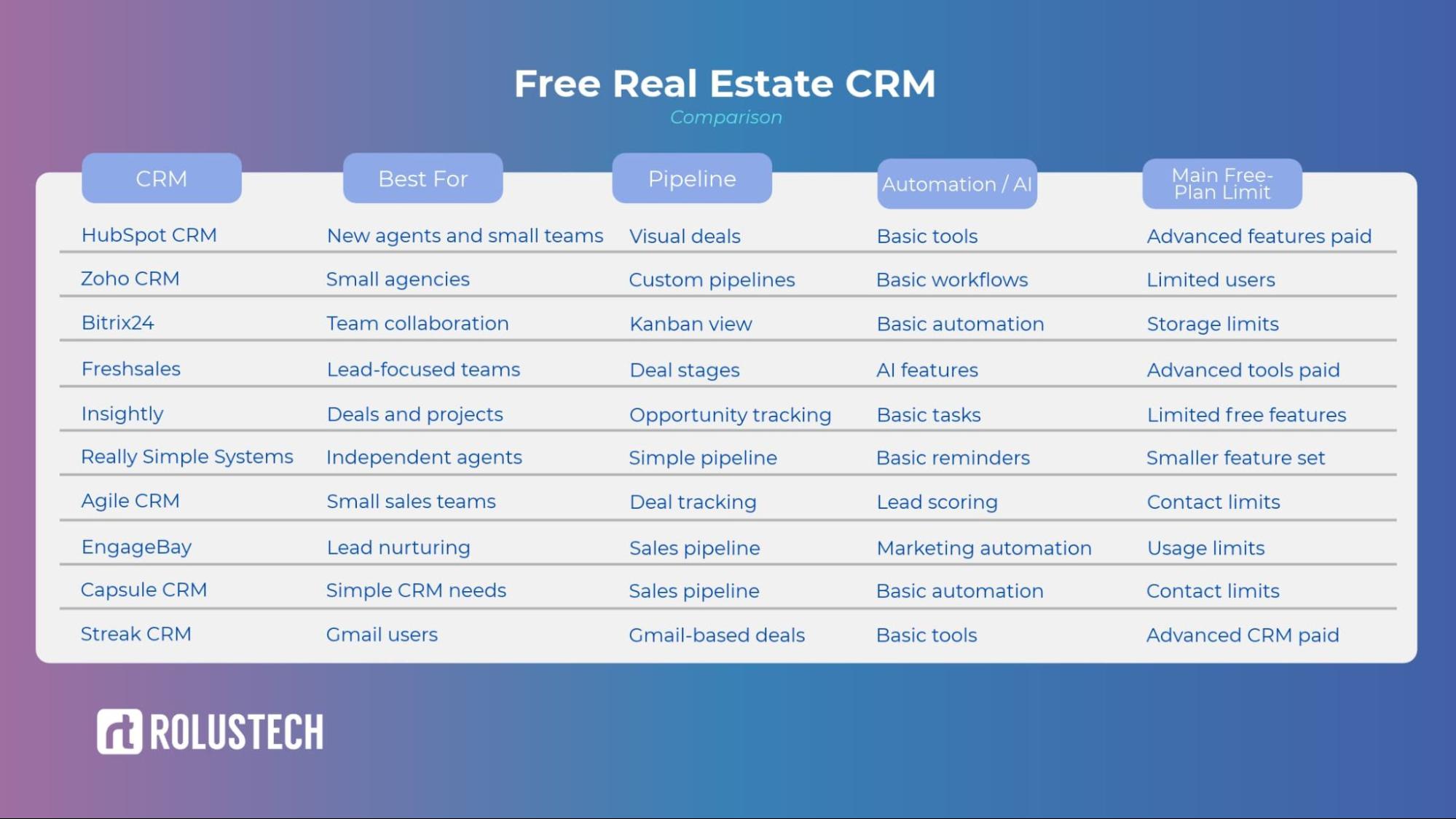
The best free real estate CRM depends on your team size, sales process, and automation needs. The table below compares key features and free-plan limitations of popular options.
How Free Real Estate CRM Software Works in Practice
Managing Property Enquiries
A CRM captures a property enquiry and helps agents track qualification, viewing, follow-up, and conversion. This creates a clear workflow for each lead.
Managing Buyer and Seller Relationships
Agents can keep separate buyer and seller records with contact details and communication history. This helps maintain context across calls, meetings, and property discussions.
Tracking Multiple Properties and Deals
Pipelines help agents manage several properties and transactions at once. Each record can show the property, client, deal stage, and next action.
Automating Routine Follow-Ups
Agents can set viewing reminders, post-call tasks, inactive-lead alerts, and scheduled emails. These CRM workflows reduce manual work and support consistent follow-up.
AI-Powered Features in Free Real Estate CRM Software
AI for Lead Prioritization
AI can help agents prioritize leads by looking at activity, past enquiries, email engagement, and contact history. This can highlight prospects who may need faster follow-up.
AI for Sales and Follow-Up Tasks
AI can draft emails, summarize conversations, create tasks, and suggest follow-up actions. It can also support personalized messaging and automated follow-up sequences.
AI Limitations on Free Plans
Free CRM plans may limit AI usage or keep advanced features behind paid plans. Check the available AI features, usage limits, and upgrade requirements before choosing a CRM.
Real Estate CRM Integrations and Data Management
Email, Calendar, and Communication Integrations
Connecting email, calendars, SMS, or WhatsApp can link conversations, appointments, and follow-ups to each client record. This gives agents a clearer customer history.
Property Website and Lead Form Integrations
Website and lead form integrations can send new property enquiries directly into the CRM. Agents can then assign leads, track their source, and start follow-ups without manual entry.
Client Data Security and Access
Agencies should check user permissions, data access, exports, backups, and privacy controls before storing client data. These safeguards help protect contact details, property information, and transaction records.

What Are the Limitations of a Free Real Estate CRM?
User and Contact Limits
Free plans may limit the number of users, contacts, or records an agency can manage. These limits can become a problem as the team and client database grow.
Automation and AI Limits
Advanced workflows, automation, AI tools, and sales features may be limited or unavailable. Agents may need to handle more tasks manually on a free plan.
Reporting and Integration Limits
Free versions may offer only basic reports and dashboards. Custom reporting, APIs, and third-party integrations often require a paid plan.
How Much Does a Free Real Estate CRM Really Cost?
Free Plan vs Paid Upgrades
A free CRM has a $0 base price, but extra users, automation, storage, reporting, or integrations may require paid upgrades. Compare the total cost with the time saved on data entry and follow-up tasks.
Hidden Implementation and Setup Costs
Even free CRM software can involve costs for data migration, customization, integrations, training, and ongoing administration. Poor setup can also lead to missed follow-ups, lost leads, and wasted agent hours.
How to Choose the Best Free CRM for Real Estate
Best Free CRM for Individual Realtors
Solo agents should look for simple CRM tools with mobile access, contact management, reminders, and easy setup. A smaller feature set can be enough if it supports daily sales activities.
Best Free CRM for Small Real Estate Agencies
Small agencies need shared deal pipelines, lead assignment, team collaboration, permissions, and basic reporting. The CRM should also be easy for agents to adopt and use consistently.
Best CRM for Real Estate Investors
Investors may need flexible records, multiple deal pipelines, property tracking, automation, and integrations. Custom fields can also help organize property and investment details.
When Should You Upgrade From a Free CRM?
Consider upgrading when you reach contact or user limits, need advanced automation, require deeper integrations, or need more reporting and workflow flexibility.

Common Mistakes to Avoid When Choosing a Free Real Estate CRM
Choosing Based Only on the $0 Price
Do not choose a CRM only because it is free. Check its features, limits, ease of use, and future costs before adding client and transaction data.
Ignoring Integration Requirements
Missing integrations can force agents to enter lead and client information manually. Check whether the CRM connects with your email, forms, SMS, and other tools.
Overlooking Data Export and Ownership
Make sure you can access and export your client data when needed. This makes it easier to move contacts, notes, documents, and transaction data to another CRM.
Choosing a CRM That Cannot Scale
A free CRM may become limiting as users, leads, and sales activities increase. Choose a platform that can support growing automation, reporting, and workflow needs.
How Rolustech Can Help With Real Estate CRM Implementation
CRM Customization for Real Estate Workflows
Rolustech can customize CRM workflows for lead management, property enquiries, sales pipelines, and follow-ups. This helps agencies align the CRM with their existing processes.
CRM Integration and Data Migration
Rolustech can help integrate CRM software with business applications and migrate client data. This can reduce manual work and disruption during implementation.
CRM Automation and Ongoing Optimization
Rolustech can automate repetitive tasks such as reminders, lead assignments, and follow-ups. Ongoing optimization can help keep the CRM aligned with changing business needs.
Conclusion
Choosing a free real estate CRM comes down to features, plan limits, workflow fit, integrations, data management, and scalability. The right option should support your current needs while leaving room for growth.
If your agency needs a more tailored setup, Rolustech can help with CRM customization, integration, data migration, and implementation. This can help you build a CRM that fits your real estate workflows.
Frequently Asked Questions
What is the best free CRM for real estate?
The right CRM depends on your team size, features, integrations, and workflow needs. Compare free-plan limits before choosing.
Is there a completely free CRM for real estate agents?
Yes. Several CRM platforms offer free plans, but they often limit users, storage, automation, AI, or reporting.
What features should a free real estate CRM have?
Look for lead management, client records, pipelines, follow-ups, mobile access, reporting, and integrations.
Can I use a free CRM for real estate investors?
Yes. Free CRMs can manage contacts and deals, but complex property workflows may need paid features.
Is a free CRM enough for a small real estate agency?
It can be enough for basic needs. Growing teams may need more users, automation, reporting, and integrations.
How do I choose the best real estate CRM software?
Compare features, limits, integrations, ease of use, scalability, data management, and total cost.